The cannabis industry is heading into 2026 with fresh momentum. After a decade of rapid growth, cannabis is beginning to settle into a new era of maturity and transformation. From shifting federal policy to new waves of innovation and consolidation, the cannabis industry trends emerging this year offer a glimpse into where our industry is going, and what it could mean for operators and the future of cannabis in the U.S.
While there has been talk for years about rescheduling cannabis, the end of 2025 saw renewed movement when President Trump signed an executive order directing the Attorney General to expedite moving cannabis from Schedule I to Schedule III under the Controlled Substances Act. While this is good news for our industry, the onus is still on the DEA to reschedule cannabis, and government agencies typically move slowly, like glacial.

In 2023, the Department of Health and Human Services recommended that the DEA reschedule cannabis at the federal level. The following year, the DEA took a major step forward by releasing a proposed rule to move cannabis from Schedule I to Schedule III, pointing to evidence that cannabis has accepted medical use and a lower abuse risk than other Schedule I substances. A formal hearing was scheduled for late 2024, but here’s where things stalled out.
The DEA’s cannabis rescheduling timeline slipped largely because the process shifted from an ordinary notice-and-comment rulemaking into a formal, trial-like administrative hearing. Participants then filed motions and raised procedural objections, particularly around who should be allowed to participate and whether any improper off-the-record communications occurred. Those disputes triggered rulings and appeals and the presiding judge paused the hearing track while those issues were addressed, delaying progress towards a final decision.
President Trump's timely executive order revives the momentum for rescheduling, however the process is still dependent upon the DEA and the continuation of the rulemaking process. There’s no official date set to publish the new rule, however 2026 is realistic for implementation if agencies move efficiently.

What are the key implications of rescheduling cannabis? A big one is 280E tax relief. Moving cannabis from Schedule I to III is widely expected to remove the 280E barrier for state-legal cannabis businesses, because 280E is tied to Schedule I & II trafficking.
What is 280E? IRS tax code 280E is a rule that prevents businesses from deducting normal operating expenses if they’re considered to be trafficking federally illegal drugs. Since cannabis is currently classified as a Schedule I substance, legal cannabis companies can’t write off basic expenses like rent, payroll, marketing, or utilities the way other businesses can. This results in them having to pay an effective tax rate that’s 3.5x higher than businesses in any other industry. That’s why 280E is one of the biggest financial headaches for the cannabis industry and why rescheduling could be such a major relief.
If cannabis moves to Schedule III, one of the biggest outcomes could be broader cannabis research in the U.S. Right now, federal rules make it difficult for scientists to study cannabis the way they study other medicines, leaving consumers with limited guidance on things like dosing, health benefits, and long-term effects.
We still lack high-quality evidence on a lot of real-world cannabis use, especially for pain, anxiety, sleep, PTSD, and opioid substitution. Easier research access could lead to better clinical studies, more accurate safety information, and new cannabis-based treatments in the future. For consumers, this could mean a market shaped less by guesswork and hype, and more by real science, consistent standards, and evidence-backed products.

Despite legalization spreading across the country, many cannabis businesses still operate without normal access to the banking system. Even if cannabis is rescheduled, companies shouldn’t expect banks to suddenly jump in overnight. Most big financial institutions are still waiting for clearer federal rules and tend to be cautious about the risks. Rescheduling could help ease some of the uncertainty and gradually expand basic banking options, but it likely won’t immediately lead to widespread loans, credit card services, or full mainstream support. A bigger shift would probably take specific legislation, like the SAFE Banking Act, to truly bring cannabis into the financial fold.

For most of the past decade, the cannabis industry was in ‘land grab’ mode, with companies racing to enter new states, build cultivation capacity, and establish brands before the regulatory landscape fully settled. As our market matures, cannabis is beginning to move into a more traditional business phase, where profitability really matters, efficiency outweighs expansion-at-all-costs, and stronger operators absorb weaker ones. That shift is why a growing wave of consolidation is shaping up to be one of the defining trends in 2026.
LeafLink’s 2025 industry report describes the cannabis market as entering a phase of quieter but meaningful operational change, laying the groundwork for more sustainable growth and consolidation.
M&A is a normal part of any major industry once growth starts to level out. It often signals that the market is becoming more competitive, companies are looking for smarter ways to scale, and operators are demanding more streamlined solutions instead of fragmented ones.
The cannabis industry saw a sharp decline in completed M&A deals from 2022 through 2025. In 2022, roughly 158 cannabis-related acquisitions were completed. This number declined to about 113 in 2023 as capital tightened and transactions took a dive. 2024 brought even fewer deals, with only around 50-60 U.S. deals closed for the year. 2025 saw no meaningful rebound, with the deal count hovering at similar levels to 2024. However, activity seems to be heating up in 2026. The chart below illustrates the annual number of completed cannabis industry M&A deals in the U.S.
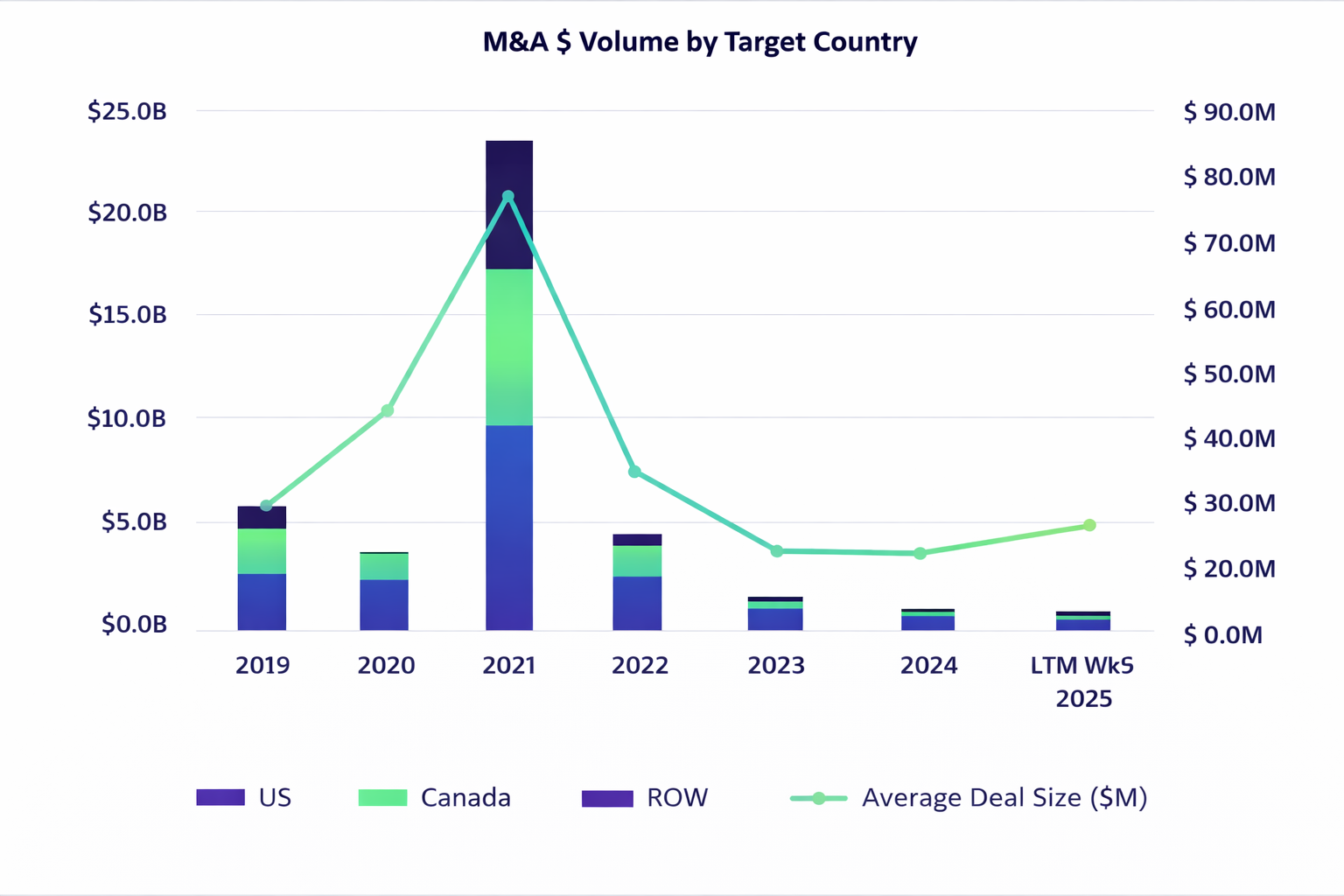
In 2026, cannabis M&A is taking many forms as the industry continues to evolve. Across the market, deals are increasingly focused on building stronger, more resilient businesses. Whether through multi-state operators acquiring smaller brands, companies pursuing vertical integration across cultivation, manufacturing, and retail, or technology platforms combining to offer more connected, end-to-end solutions. In the cannabis software space especially, this kind of consolidation reflects growing demand for streamlined infrastructure, which is exactly the context behind Canix’s acquisition of Trym.
Other recent and notable M&A activity:
All together, these deals reflect a landscape where stronger operators and brands are scaling up, building resilience, and preparing for the industry’s next chapter.

One of the less flashy but highly operator-relevant cannabis industry trends is the growing focus on accounts receivable. AR is one of the biggest forces influencing how cannabis businesses survive, scale, and build trust across the supply chain. For years, brands and suppliers have dealt with delayed payments, stretched terms, and unpaid invoices. Often because cash flow is tight across the board in a high-tax, capital-constrained market. Recent reporting suggests the industry is now sitting on billions in outstanding receivables, with fewer than half of invoices paid on time.
%20(2).png)
MJBizDaily described ballooning receivables as a ‘ticking time bomb’ for the cannabis industry, with outstanding invoices putting enormous strain on cultivators, manufacturers, and distributors. However, operators are beginning to take AR more seriously, adopting stronger practices and new tools to bring more accountability and stability to the supply chain.
Canix, cannabis ERP software provider, is helping operators take a proactive approach to accounts receivable by building protections directly into the platform. Features like ‘Maximum Outstanding Balance’ allow businesses to set custom credit limits by account and automatically block new sales orders once a customer’s receivables get too high. Canix also offers two-way payment syncing with QuickBooks to ensure AR stays updated in real-time, along with integrated payment processing at very low rates to help customers get paid faster and more easily.
As we evaluate the leading cannabis industry trends of 2026, it’s clear we’re entering a new phase of maturity, infrastructure, and long-term growth. From federal rescheduling to consolidation across brands and technology platforms, to an increasing focus on profitability and doing things the right way, the forces shaping this year reflect an industry developing a more sustainable foundation. The next chapter of cannabis will be driven by operators and innovators focused on efficiency and resilience.
Subscribe to our newsletter.


The future of cannabis technology



.png)

